
Manual of product P-85
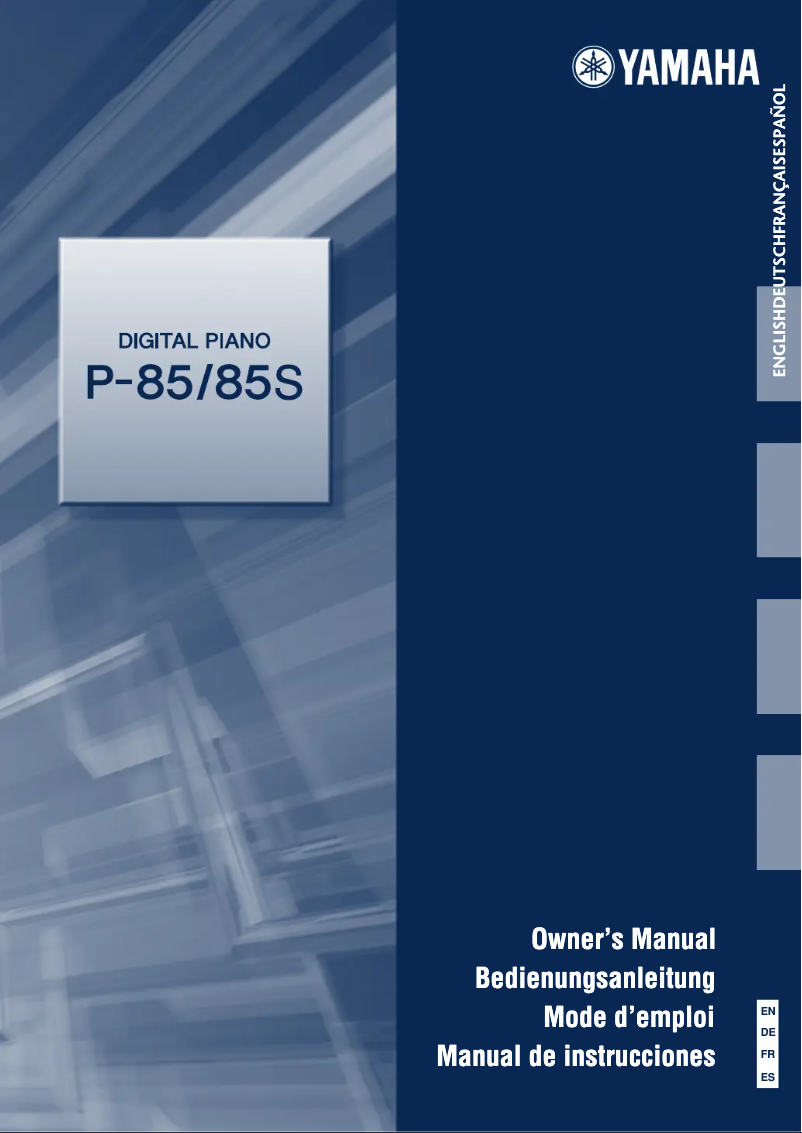
Editorial note
The Yamaha P-85 stands out for its exceptional sound quality, offering realistic and immersive playback thanks to high-quality piano samples. Its compact and elegant design is a major asset, facilitating its integration into various spaces, whether at home or in the studio. Moreover, the intuitive interface allows users, whether beginners or advanced, to easily navigate between different options, contributing to a positive user experience. However, some drawbacks are worth mentioning. The weight and size of the P-85 can pose portability issues for musicians on the go. Although the sound performance is excellent, it does not compete with that of high-quality acoustic pianos, which may disappoint some professional pianists. Additionally, the price of the Yamaha P-85 may seem high compared to other digital pianos offering similar features. Finally, the limited connectivity may restrict integration with other audio equipment, which could be a hindrance for users wanting a more complex setup. In terms of durability and reliability, the P-85 benefits from Yamaha's reputation, ensuring a long lifespan due to its build quality. Overall, the Yamaha P-85 is an excellent choice for musicians looking for a quality digital piano, although it is important to consider the aspects of portability and connectivity before making a purchase.Score details
User experience
The user experience is positive thanks to an intuitive interface, although some users may find it limited for advanced options.
Performance
The sound performance is excellent with realistic reproduction, although the sound does not rival that of high-quality acoustic pianos.
Design
The compact and elegant design of the Yamaha P-85 allows for easy integration into various spaces, which is a major asset.
Value for money
The price may seem high compared to other digital pianos, although the sound quality and durability partly justify this investment.
Robustness
The durability and reliability of the product are ensured by Yamaha's manufacturing quality, guaranteeing a long lifespan.
Usability
Ease of use is a strong point, but some users may find the interface limited for advanced features.
Features
Although versatile for various music styles, the limited connectivity may restrict integration with other audio equipment.
Advantages
Realistic and rich sound
Compact and modern design
Intuitive and easy-to-use interface
Versatile for practicality and performance
Guaranteed robustness and reliability
Disadvantages
Heavy and bulky for transport
Limited and not very intuitive interface
Sound inferior to acoustic pianos
High price compared to the competition
Limited connectivity for audio equipment
Frequently Asked Questions
How do I connect the Yamaha P-85 to an external amplifier or audio system?
What should I do if my keys seem sticky?
How can I adjust the touch sensitivity of the keys to my preferences?
Can I record and playback my performances with the Yamaha P-85?
How do I reset the factory settings of my Yamaha P-85?
Is the Yamaha P-85 manual available in French?
Similar products


More product categories from brand Yamaha
More product types from brand Yamaha




Presentation of product P-85 specifications from brand Yamaha
General Information
The Yamaha P-85 is a digital piano from the renowned brand Yamaha, known for its excellence and innovation in the music industry. This model, the P-85, is designed to provide an enriching playing experience, combining high-level technical performance with ease of use. Thanks to its careful design, it integrates seamlessly into various environments, whether at home or in the studio.
Advantages
The Yamaha P-85 stands out for its exceptional sound quality, offering realistic and rich sound reproduction thanks to top-notch piano samples. Its compact and elegant design allows for easy integration into any space while adding a modern touch. Additionally, the device is characterized by its ease of use, making navigation between different options accessible, whether one is a beginner or an experienced musician. Its versatility makes it ideal for personal practice sessions, live performances, or recordings, catering to a variety of musical styles. Finally, the durability and reliability of the Yamaha P-85 are ensured by the brand's quality craftsmanship, guaranteeing years of service.
Disadvantages
However, the Yamaha P-85 has some notable drawbacks. Its relatively heavy weight can make it less portable, which may pose a challenge for musicians on the go. Furthermore, although its user interface is functional, it may seem limited and not very intuitive for those seeking advanced options. In terms of sound, while acceptable, it may not compete with the quality of high-end acoustic pianos, which could disappoint some professional pianists. The price of the P-85 may also be perceived as high compared to other digital pianos with similar features. Finally, the limited connectivity could restrict its integration with other audio equipment or software, which may be a drawback for users looking for a more complex setup.


