
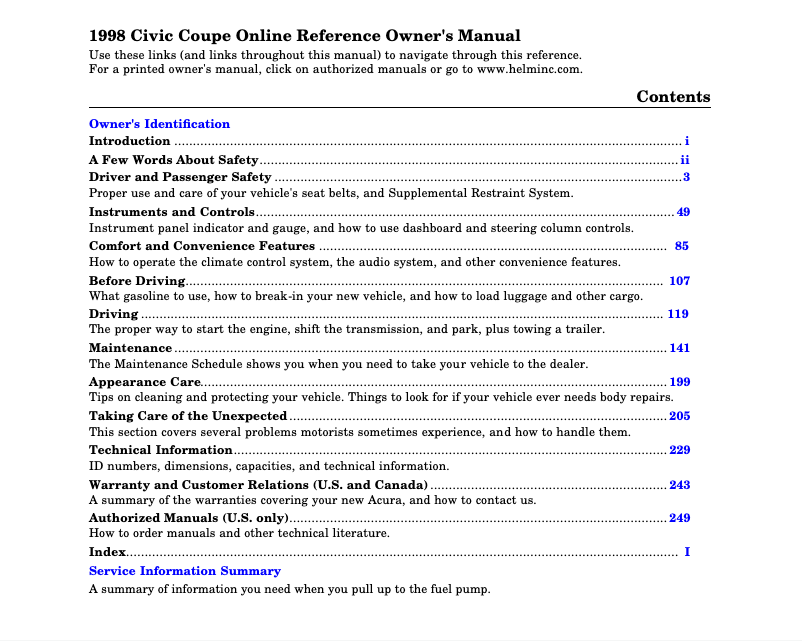
Manual of product Civic Hatchback (1998)
Editorial note
The Honda Civic Hatchback (1998) is distinguished by its reputation for reliability and durability, which reassures owners about the longevity of their vehicle. This model is also appreciated for its fuel economy, making it a wise choice for daily commutes. Its compact design facilitates access to the rear and offers storage flexibility, ideal for city dwellers. Users often highlight the maneuverability and driving comfort, contributing to a pleasant experience on the road. However, this model has some notable drawbacks. Although it is robust, rust issues can arise, especially in regions where salt is used on roads in winter. Fuel consumption, while acceptable for its time, may seem high compared to modern standards. Additionally, the onboard equipment and technologies are quite basic, which may disappoint drivers accustomed to more advanced features. Interior comfort can also be limited, particularly regarding seat support during long trips. Finally, the availability of spare parts can pose a challenge, potentially leading to additional costs for repairs. Overall, although the Honda Civic Hatchback (1998) has its limitations, it remains a good choice for those seeking a reliable and economical vehicle, with an interesting value-for-money ratio for daily commutes.Score details
User experience
The user experience is generally positive due to the handling and driving comfort, although interior comfort may be limited.
Performance
The performance is solid for a vehicle of this era, with a pleasant drive. However, fuel consumption may seem high compared to modern models.
Design
The compact design is practical and facilitates access to the rear, although it may seem basic by today's standards.
Value for money
Due to its proven reliability and fuel economy, this model represents good value for money for daily commutes.
repairability
The availability of spare parts can be a challenge, which could lead to additional costs for repairs.
Robustness
Although the Honda Civic is known for its durability, rust issues can occur, especially in winter areas.
Features
The onboard equipment and technologies are basic, which may disappoint those looking for modern features.
Documentation
A user manual is available, but the documentation could be more comprehensive.
Advantages
Recognized reliability and durability
Appreciable fuel economy
Compact and practical design
Pleasant and maneuverable driving
High customer satisfaction
Disadvantages
Frequent rust problems
Relatively high fuel consumption
Basic and limited interior equipment
Insufficient seat comfort for long journeys
Difficult availability of spare parts
Technical Specifications Civic Hatchback (1998)
General Information
-
ModelCIVIC HATCHBACK (1998)
-
Brand
-
Category
-
Type
-
SKU794418
-
MPN794418
Frequently Asked Questions
How can I convert miles to kilometers?
Where can I find the VIN number of my Honda?
What is the VIN number?
How often should I have my Honda serviced?
How often should I replace the brake fluid in my Honda?
What is the difference between E10 and E5 gasoline?
What should I do if one or more doors do not open from the inside?
My car radio won't turn on, what should I do?
Is the manual for the Honda Civic Hatchback (1998) available in French?
Similar products


More product categories from brand Honda
Other Honda
Tools Honda
More product types from brand Honda







Presentation of product Civic Hatchback (1998) specifications from brand Honda
General Information
The Honda Civic Hatchback (1998) is an iconic model from the Honda brand, known for its commitment to quality and innovation. This vehicle stands out for its sturdiness and reliability, providing users with a pleasant and reassuring driving experience. The Civic Hatchback (1998) is designed to ensure optimal performance, making it a popular choice among city dwellers and drivers looking for a versatile car.
Advantages
Among the many strengths of the Honda Civic Hatchback (1998), we find:
- Proven reliability: This model is renowned for its durability, ensuring peace of mind for its owners.
- Fuel economy: Its design promotes reasonable fuel consumption, making it an economical choice for daily commutes.
- Compact and practical design: The hatchback format facilitates access to the rear of the vehicle and offers storage flexibility, ideal for urban living.
- Pleasant driving experience: The handling and driving comfort of the Civic Hatchback are often praised by users.
- Satisfaction history: Many owners express their contentment regarding the performance and reliability of this model.
Disadvantages
However, it is important to consider some potential drawbacks:
- Rust issues: This model may be prone to corrosion, especially in areas where salt is used on roads in winter.
- Fuel consumption: Although reasonable for its time, it may seem relatively high compared to current more fuel-efficient models.
- Basic equipment: The onboard technologies are quite simple, which may not meet the expectations of modern users accustomed to advanced features.
- Limited comfort: The interior may lack adequate support in the seats for long journeys.
- Parts availability: Being an older model, finding replacement parts can be challenging and lead to additional costs for repairs.


