
Manual of product ActiveHybrid 5 (2016)
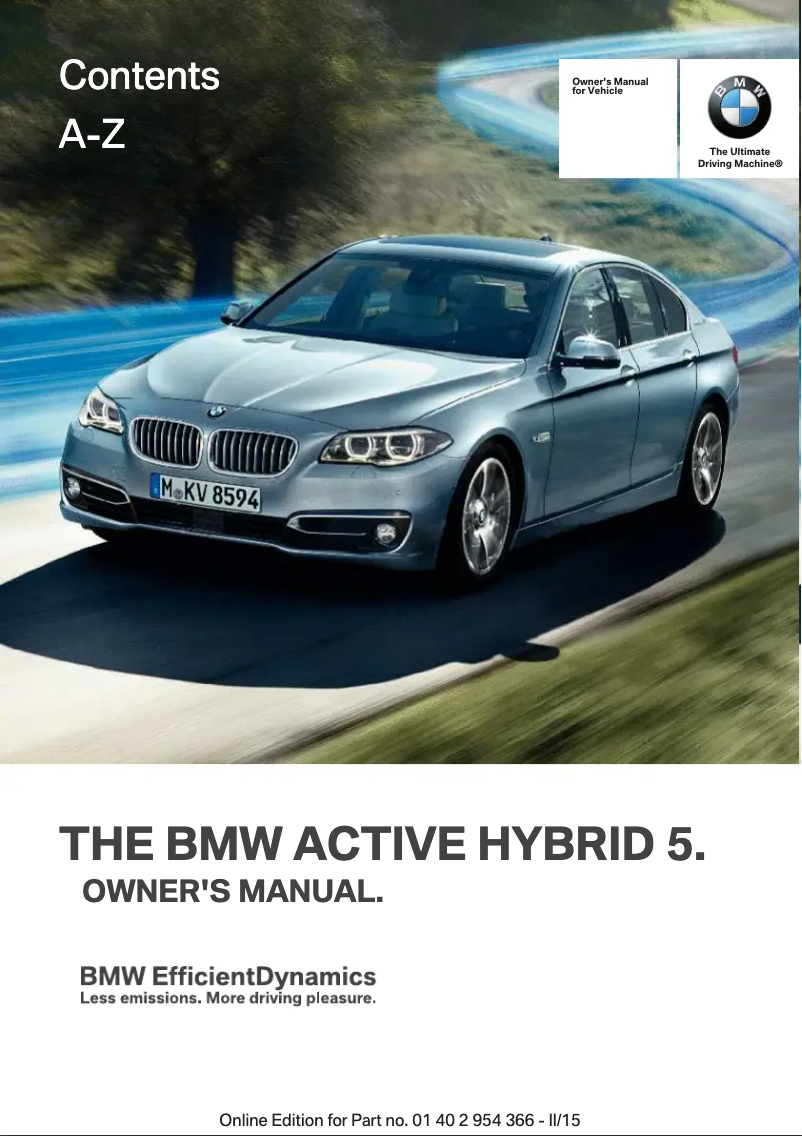
Editorial note
The BMW ActiveHybrid 5 (2016) is a car that combines optimal performance and advanced hybrid technology. Thanks to the combination of a combustion engine and an electric motor, it offers a dynamic and responsive driving experience while contributing to reduced fuel consumption and CO2 emissions. The interior comfort is high-end, with quality materials that ensure a pleasant experience for all passengers. Moreover, its elegant and sophisticated design perfectly reflects the BMW brand image, thus ensuring a distinctive style on the road. However, it is important to note some drawbacks. The maintenance and repair costs can be high due to the complexity of hybrid systems that require specific skills. Although fuel consumption is reduced compared to non-hybrid models, it may not reach the expected efficiency levels under varied driving conditions. Additionally, the extra weight of hybrid components can affect handling and sporty performance, while the trunk may be less spacious due to the space required for the batteries. In summary, the BMW ActiveHybrid 5 (2016) stands out for its strengths in comfort, design, and technology, but it also presents challenges in terms of maintenance costs and performance in certain situations. Those looking for an eco-friendly and stylish driving experience will find a vehicle to their liking, provided they take into account the mentioned downsides.Score details
User experience
The user experience is excellent thanks to high-end interior comfort and an intuitive infotainment system, providing a pleasant drive for all passengers.
Performance
Performance is optimal due to the combination of a combustion engine and an electric motor, although the extra weight may affect handling compared to traditional models.
Design
The design is elegant and sophisticated, true to BMW's brand image, ensuring a distinctive style on the road.
Value for money
The cost of maintenance and repair is high, particularly due to hybrid technology, which may diminish the perception of long-term value.
Features
Modern technological features and advanced connectivity add real value to the vehicle, although the complexity of the systems may pose long-term reliability issues.
Battery life
Fuel consumption is reduced, but may not be as efficient as expected in varied driving conditions, which limits the appeal of hybrid technology.
Advantages
Dynamic performance with hybrid engine.
Reduced consumption and CO2 emissions.
Elegant and distinctive BMW design.
High-end and comfortable interior.
Modern technologies and advanced connectivity.
Disadvantages
High maintenance cost for hybrid technology.
Fuel consumption sometimes disappointing.
Extra weight impacting maneuverability.
Reduced trunk space due to batteries.
Reliability affected by electronic complexity.
Technical Specifications ActiveHybrid 5 (2016)
General Information
-
ModelACTIVEHYBRID 5 (2016)
-
Brand
-
Category
-
Type
-
SKU792572
-
MPN792572
Frequently Asked Questions
How do I convert miles to kilometers?
Comment puis-je localiser le numéro VIN de ma BMW ?
Qu'est-ce que le numéro VIN ?
À quelle fréquence dois-je faire réviser ma BMW ?
À quel moment devrais-je changer le liquide de frein de ma BMW ?
Quelle est la distinction entre l'essence E10 et E5 ?
Si une ou plusieurs portières ne s'ouvrent pas de l'intérieur, que devrais-je faire ?
Que faire si mon autoradio ne s'allume pas ?
Le manuel du BMW ActiveHybrid 5 (2016) est-il proposé en français ?
Similar products


More product categories from brand BMW


Presentation of product ActiveHybrid 5 (2016) specifications from brand BMW
General Information
The BMW ActiveHybrid 5 (2016) is a hybrid vehicle from the prestigious brand BMW, known for its excellence and innovation in the automotive sector. This model stands out for its efficient combination of an internal combustion engine and an electric motor, providing a driving experience that is both dynamic and responsive. The ActiveHybrid 5 (2016) is designed to optimize performance while ensuring an enriching user experience.
Advantages
This vehicle has several notable advantages:
- Optimal performance thanks to the synergy between its two types of engines, allowing for smooth and responsive driving.
- Advanced hybrid technology that reduces fuel consumption and CO2 emissions, thus promoting more environmentally friendly transportation.
- Elegant and sophisticated design, true to BMW's visual identity, giving it a distinctive style on the road.
- High-end interior, with quality materials that ensure maximum comfort for the driver and passengers.
- Modern technological features, including an intuitive infotainment system and advanced connectivity options.
Disadvantages
However, there are some limitations to consider:
- The maintenance and repair costs can be relatively high, particularly due to the hybrid technology that requires specific skills.
- Fuel consumption, while reduced compared to traditional models, may not reach the expected efficiency levels in various driving scenarios.
- The additional weight of hybrid components may affect handling and sports performance compared to conventional models in the same category.
- The trunk space may be limited due to the space required for batteries and other hybrid elements.
- The complexity of electronic and hybrid systems could raise concerns about long-term reliability.


